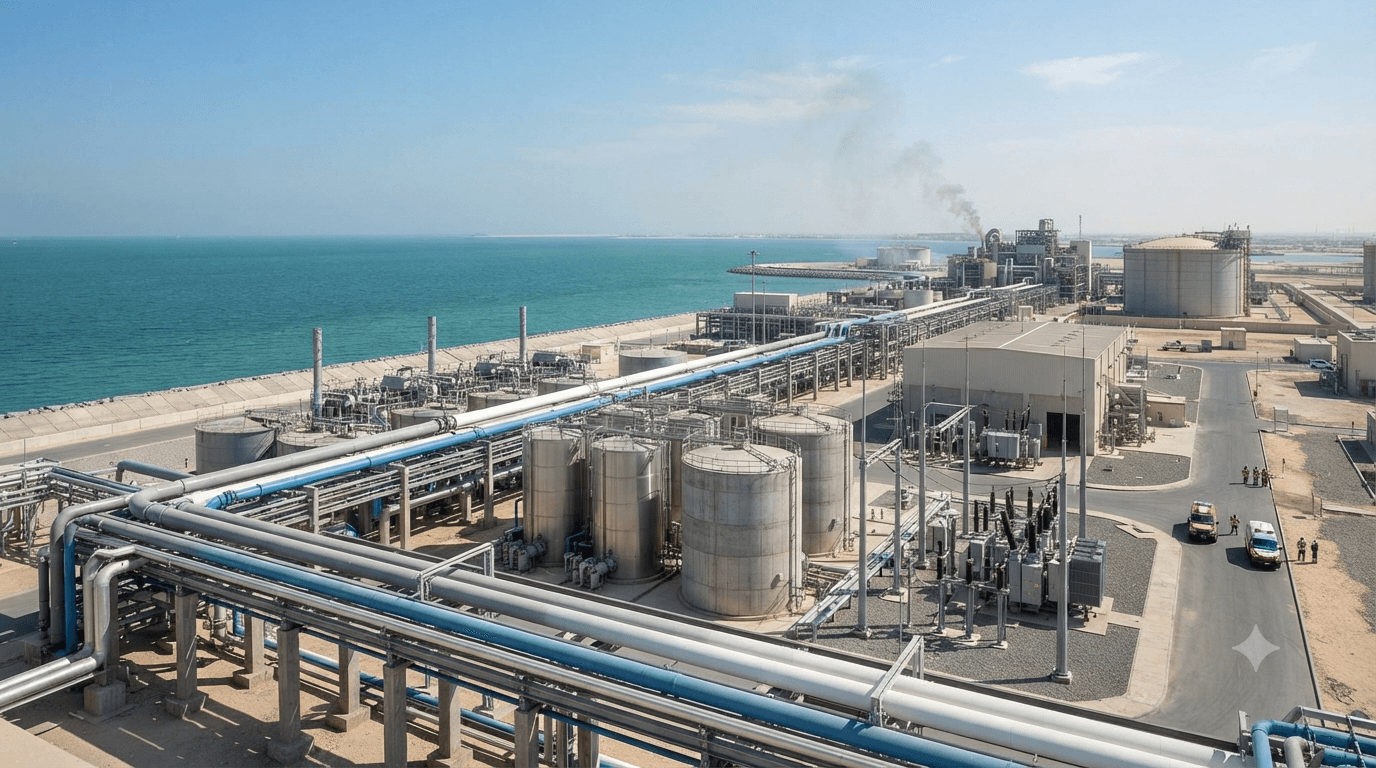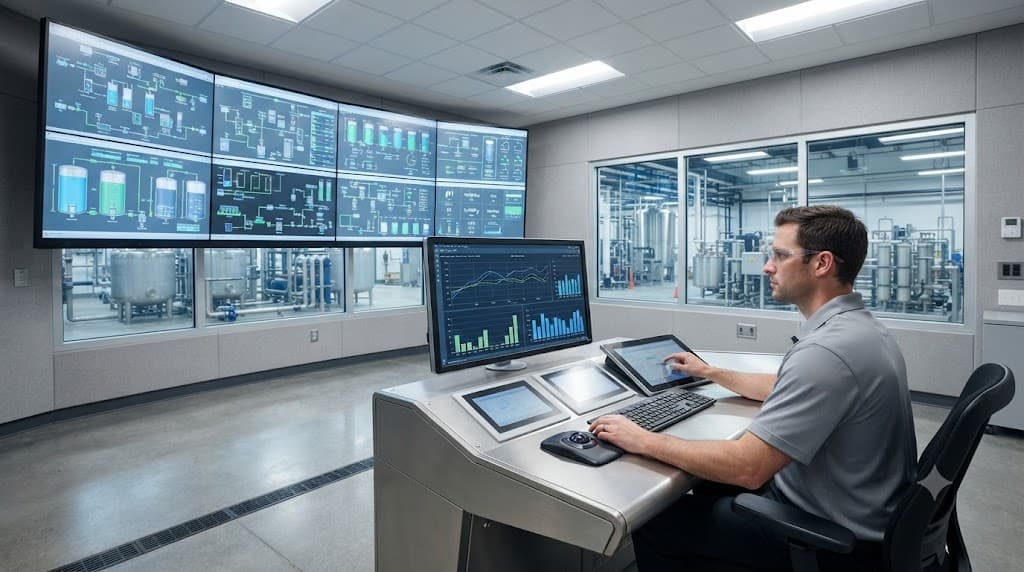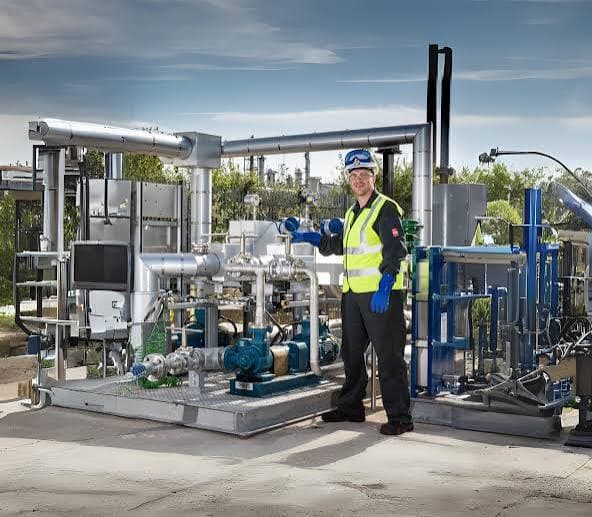
The Gulf Cooperation Council (GCC) water treatment chemical market is entering a major restocking cycle in Q3 2026. Following the recovery of maritime traffic through the Strait of Hormuz and the stabilization of regional logistics, desalination plants across the UAE, Saudi Arabia, Kuwait, and Qatar are returning to normal operating schedules.
During the disruption period, many utilities relied on emergency inventory management and delayed procurement. As operations normalize, water treatment chemical demand is rebounding rapidly, creating one of the strongest specialty chemical purchasing cycles in the region this year.
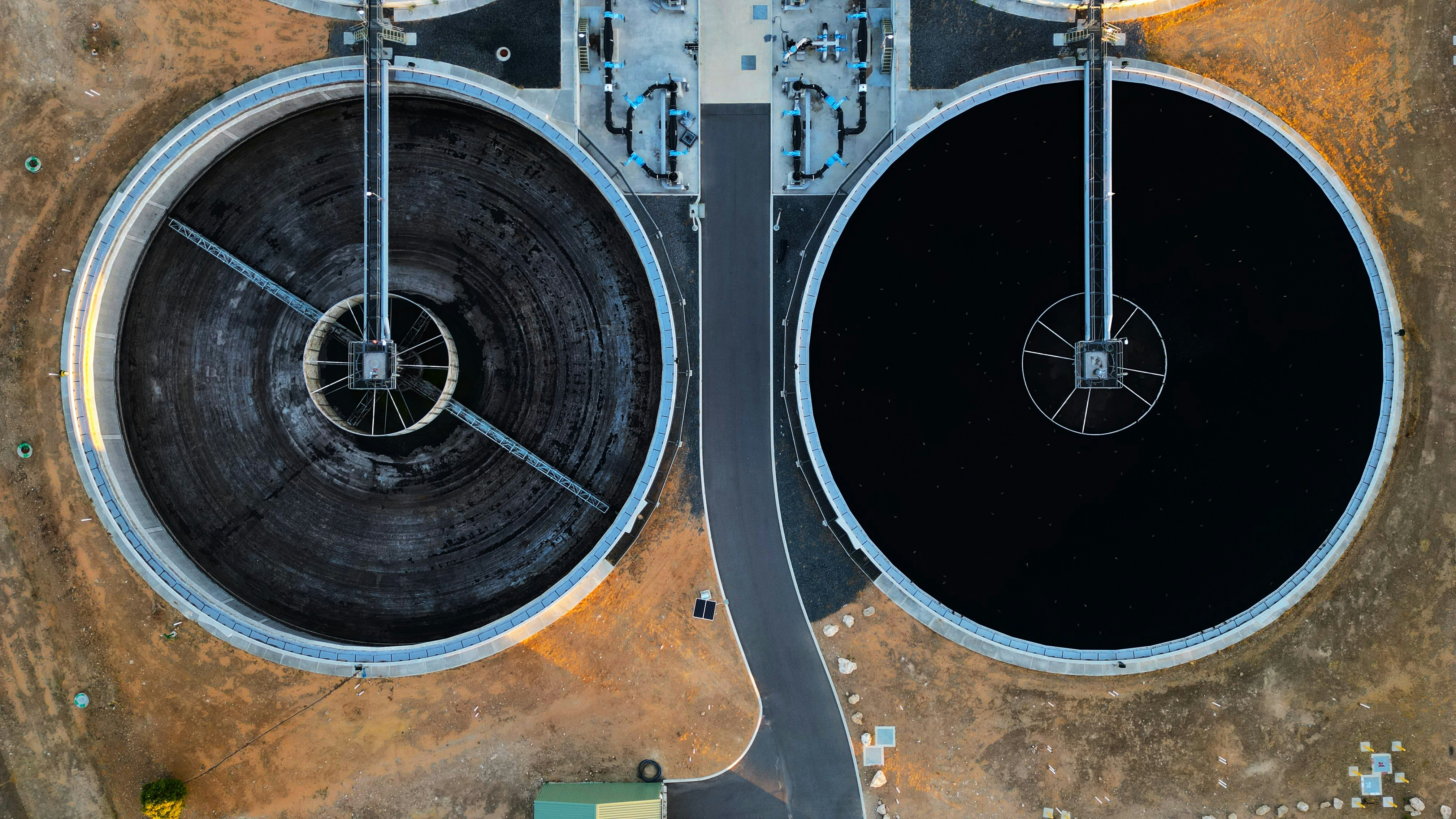
Why Desalination Drives Chemical Demand
The GCC is one of the world's most desalination-dependent regions.
Major economies including:
Saudi Arabia
United Arab Emirates
Qatar
Kuwait
depend heavily on desalinated water for municipal, industrial, and commercial use.
Large desalination facilities consume substantial volumes of specialty chemicals for water purification, membrane protection, scaling prevention, and biological control.
The Post-Crisis Restocking Wave
Throughout the Hormuz disruption, many water utilities adopted conservative chemical usage strategies.
Common emergency measures included:
Reduced inventory levels
Deferred non-essential purchases
Alternative supplier qualification
Short-term procurement contracts
Now that shipping conditions are improving, utilities are moving to restore inventory levels and improve supply security.
This has triggered a significant procurement wave across the region.
Key Chemicals Seeing Strong Demand
Polyaluminium Chloride (PAC)
PAC remains one of the most widely used coagulants in water treatment.
Applications include:
Suspended solids removal
Turbidity reduction
Drinking water treatment
Desalination pretreatment
Chinese PAC producers significantly increased exports during the crisis period and continue to compete aggressively for GCC contracts.
Polyaluminium Chloride (Industrial) - India CAS: 1327-41-9
Polyacrylamide
Polyacrylamide functions primarily as a flocculant.
Benefits include:
Improved sedimentation
Enhanced filtration efficiency
Lower sludge handling costs
Demand remains strong across municipal and industrial water treatment facilities.
Polyaluminium Chloride (Industrial) - China CAS: 1327-41-9
Sodium Hypochlorite
Sodium hypochlorite remains one of the most important disinfection chemicals.
Key uses:
Pathogen control
Drinking water sanitation
Wastewater disinfection
Distribution system protection
As utilities return to normal operating conditions, demand for disinfection chemicals is increasing.
Sodium Hydrosulfide (68%) - China CAS: 16721-80-5
Scale Inhibitors
Scale formation remains one of the biggest operational challenges in desalination systems.
Scale inhibitors help:
Protect membranes
Improve plant efficiency
Extend equipment life
Reduce maintenance costs
Demand is expected to rise alongside increased desalination output.
Biocides
Biological fouling can severely reduce desalination efficiency.
Common applications:
Reverse osmosis systems
Cooling water circuits
Storage systems
Industrial water treatment
Utilities are rebuilding inventories of both oxidizing and non-oxidizing biocides.
China and India's Growing Role
One of the most important developments during the crisis was the emergence of alternative supply relationships.
Chinese suppliers gained share through:
Competitive pricing
Large manufacturing capacity
Reliable export availability
Indian suppliers benefited from:
Geographic proximity
Established GCC trade relationships
Diversified specialty chemical portfolios
These suppliers successfully filled gaps created by logistics disruptions affecting traditional sourcing channels.
Will GCC Utilities Return to Traditional Suppliers?
This is now one of the defining commercial questions in the market.
Scenario 1: Return to Traditional Suppliers
Advantages:
Existing relationships
Technical support familiarity
Proven qualification status
Scenario 2: Multi-Origin Procurement Strategy
Advantages:
Improved supply security
Reduced geopolitical risk
Greater pricing leverage
Many procurement teams are increasingly favoring a hybrid sourcing model.
Why Supplier Relationships Matter More Than Price
Water treatment chemicals are critical operational inputs.
For desalination operators, reliability often outweighs marginal cost savings.
Key evaluation criteria include:
Product quality consistency
Technical support capabilities
Inventory availability
Delivery performance
Regulatory compliance
Suppliers that performed well during the disruption period may retain newly won business even as markets normalize.
Q3 2026 Market Outlook
The GCC water treatment sector is expected to remain one of the strongest specialty chemical demand segments during Q3 2026.
Key drivers include:
Inventory rebuilding
Desalination normalization
Infrastructure reliability initiatives
Supply chain diversification strategies
Demand growth is expected across virtually all major water treatment chemical categories.
The recovery of GCC desalination operations is creating a significant procurement cycle for water treatment chemicals. PAC, polyacrylamide, sodium hypochlorite, biocides, and scale inhibitors are all benefiting from inventory rebuilding and increased operating rates.
Beyond the immediate volume opportunity, the market is entering a strategic phase where supplier relationships established during the crisis may reshape sourcing patterns for years to come. Companies that demonstrated reliability during the disruption period are well-positioned to secure long-term contracts as utilities seek more resilient procurement strategies.
Key Takeaways
GCC desalination plants are returning to full operations.
Utilities are rebuilding water treatment chemical inventories.
PAC, polyacrylamide, sodium hypochlorite, biocides, and scale inhibitors are seeing strong demand.
China and India gained market share during the Hormuz disruption.
Utilities are evaluating whether to maintain diversified sourcing strategies.
Reliability and supply security are becoming as important as pricing.
Q3 2026 is expected to be a strong procurement period for water treatment chemicals.
Supplier relationships formed during the crisis may influence long-term purchasing decisions.