
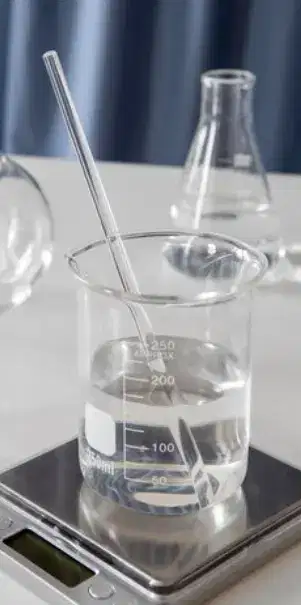
Hydrogen Peroxide (50%) - South Korea
- Origin: Korea (South)
- CAS Number: 7722-84-1
- HS Code: 28470000
- IUPAC Name
- hydrogen peroxide solution
- Molecular Formula
- H2O2
- Synonyms & Trade Names
- Hydrogen peroxide; Peroxide solution; Oxydol
- Purity / Assay (%)
- 35% min
- Grade / Quality Level
- Industrial Grade
- Physical Form
- Liquid
- Concentration
- Pure substance
- Appearance / Color
- Clear to slightly colored liquid
- Odor
- Slightly sharp
- Melting Point (°C)
- -0.4000
- Boiling Point (°C)
- 150
- Density (g/cm³)
- 1.1300
- pH
- Weak acid; H2O2 concn wt% = 35, 50, 70, 90; corresponding true pH: 4.6, 4.3, 4.4, 5.1
- Solubility in Water
- Miscible
- Signal Word
- Danger
- UN Number
- 2014
- GHS Hazard Class
- Oxidizer; Acute toxic; Skin corrosive; Eye corrosive
- H-Statements
- H271|H290|H302|H312|H314|H332|H335
- P-Statements
- P210|P220|P221|P234|P260|P264|P271|P273|P280|P301+P330+P331
- REACH Status
- Registered
- Drug Precursor Status
- Non-precursor
- Storage Class (GHS)
- 5.1
- Storage Conditions
- Cool, dark; away from metals, combustibles; strong oxidizer
- Industry Usage Tags
- Oxidizing/reducing agents
Categories
Technical Document
Brief Overview
Introducing our Hydrogen Peroxide 50%—a potent solution for versatile applications. With a concentrated formulation, it excels in cleaning, disinfection, and industrial processes. Its strong oxidizing properties effectively eliminate bacteria and viruses, making it ideal for various uses. Handle with care, follow dilution guidelines, and trust in the reliability of our high-quality product for thorough and efficient disinfection.
Manufacturing Process
There are two main methods to produce H2O2 as described below:
Method 1: Auto-oxidation of ethyl anthraquinones in a solvent such as toluene or ethylbenzene. The product ethyl anthraquinone is reduced by hydrogen over supported nickel or platinum catalyst to regenerate back the starting material, ethyl anthraquinone for continuous production of H2O2.
Method 2: Electrolytic conversion of aqueous sulfuric acid to peroxydisulfate followed by hydrolysis to H2O2. This is also known as the Weissenstein process.